Choosing your wedding dress can feel overwhelming: inspiration moves fast, advice contradicts itself, and the fear of getting it wrong is real. Yet a wedding dress is first of all a constructed garment: a cut, a fabric, a drape, a way of moving.
This guide does not replace the fitting room — that is where the dress comes alive on you — but it helps you understand the useful criteria: style, budget, timing, comfort and consistency with the venue. You can then book on our wedding dresses in Cannes page.
Our collections
Define your style
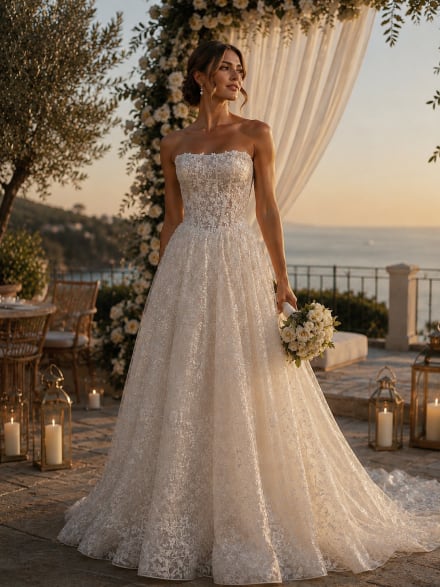
Start with your wedding, not with a trend: venue (church, beach, estate), season, formality. A rustic Provence wedding often points to flowing fabrics; an evening reception in Cannes may call for a more structured line, easier to read under artificial light.
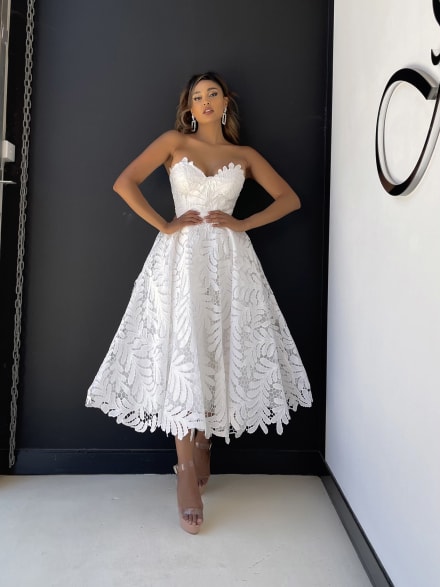
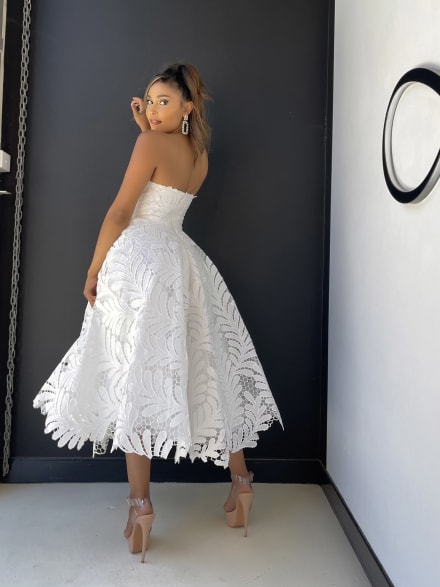
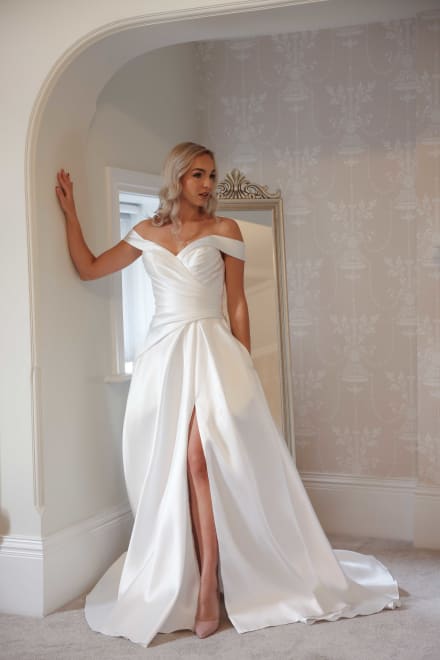
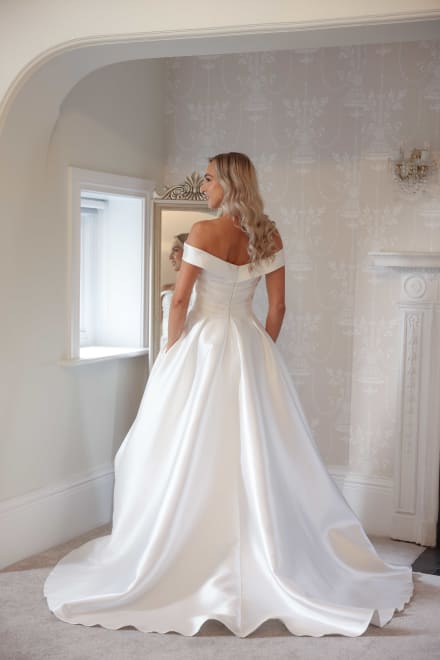
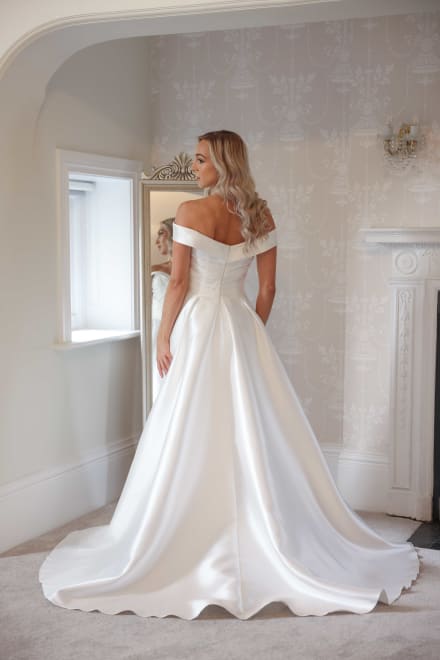
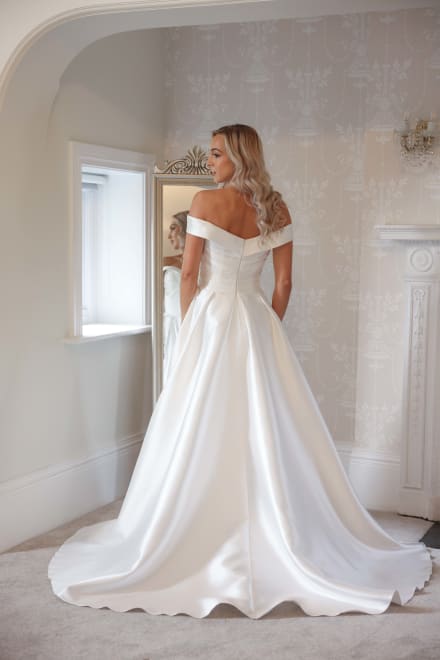
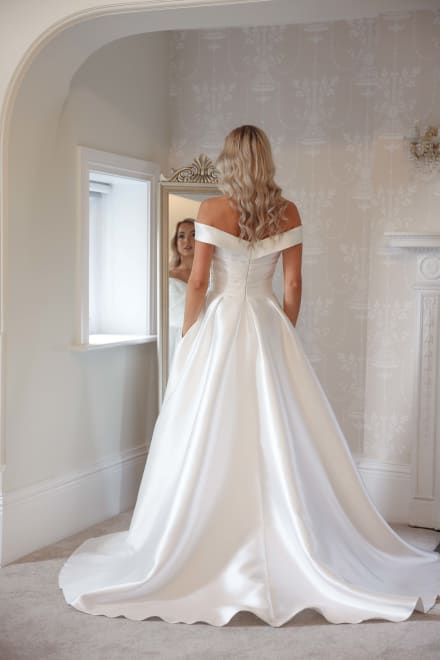
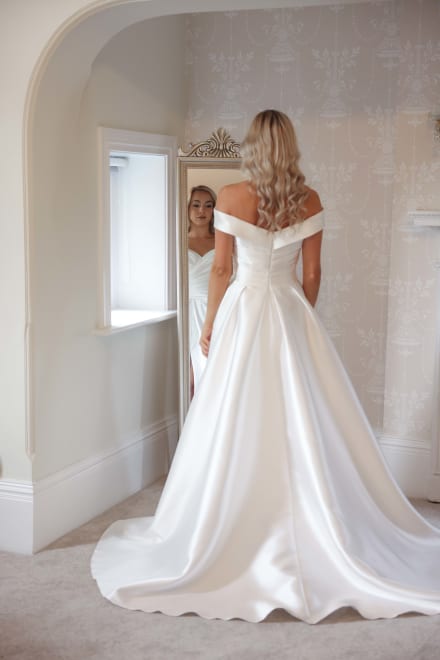
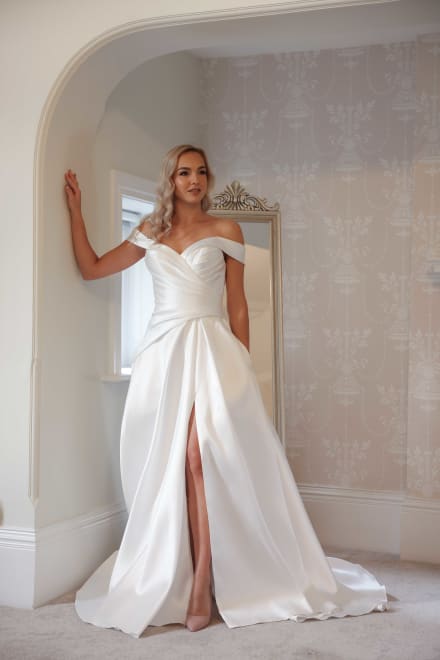
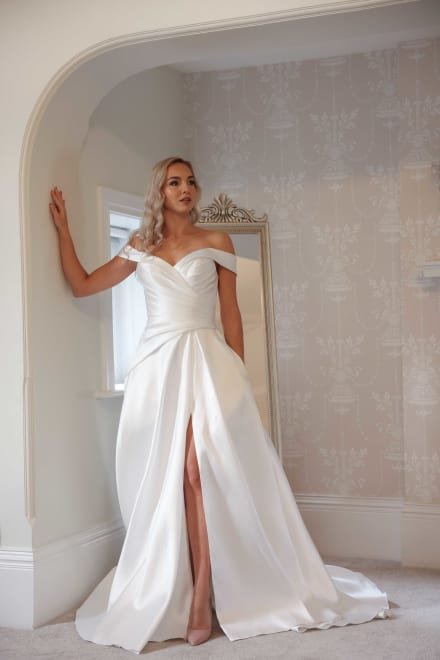
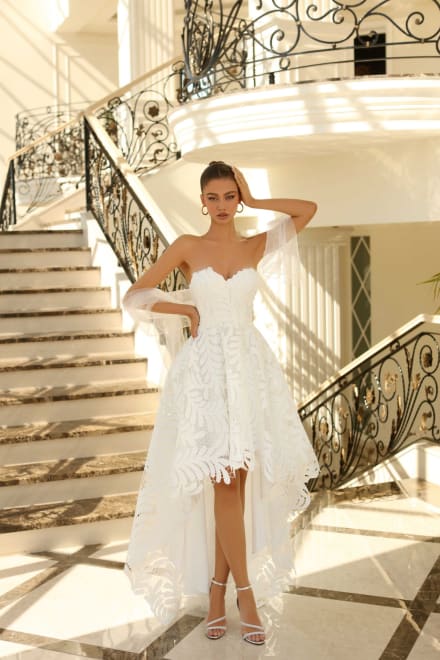
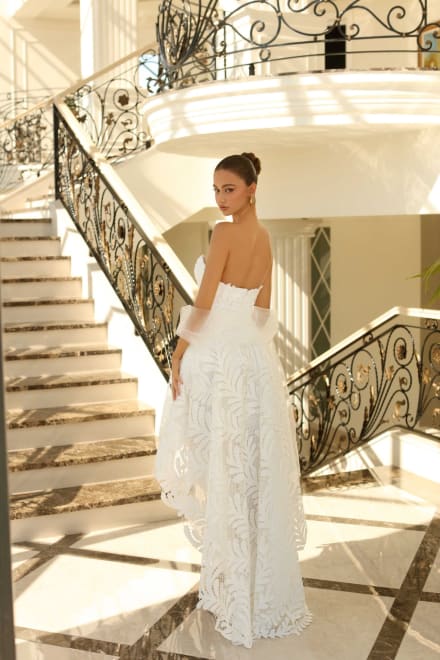
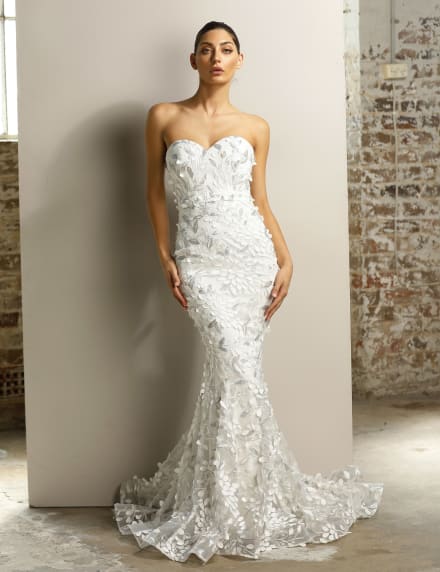
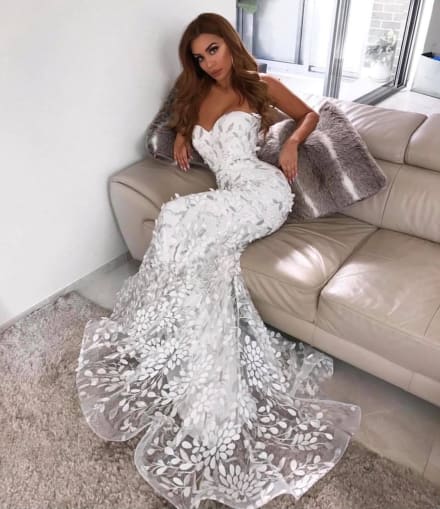
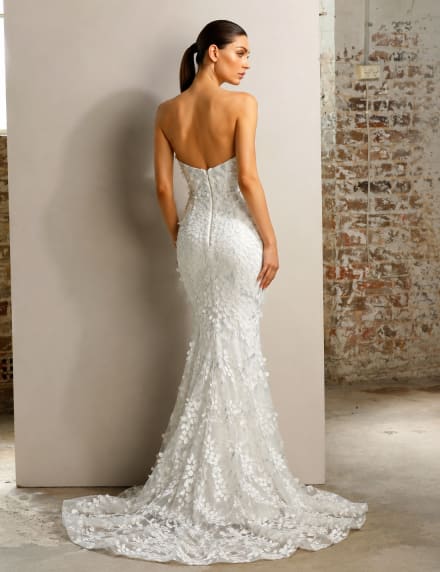
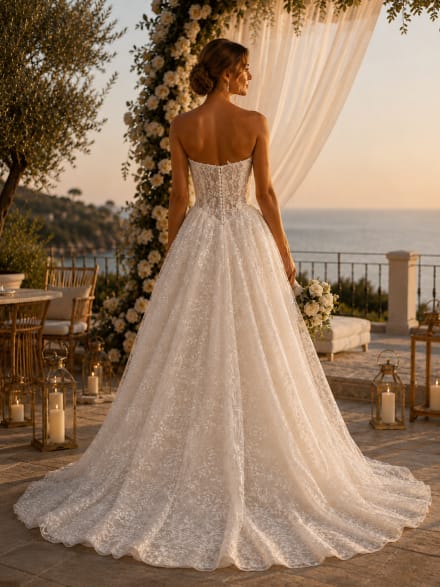
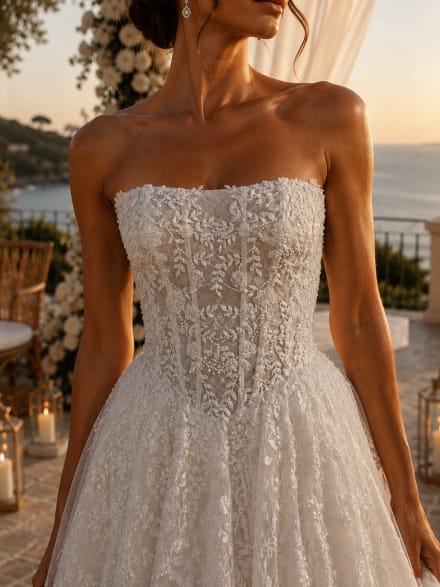
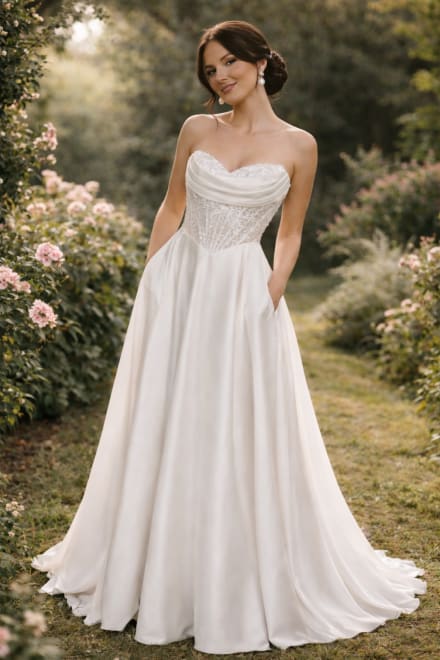
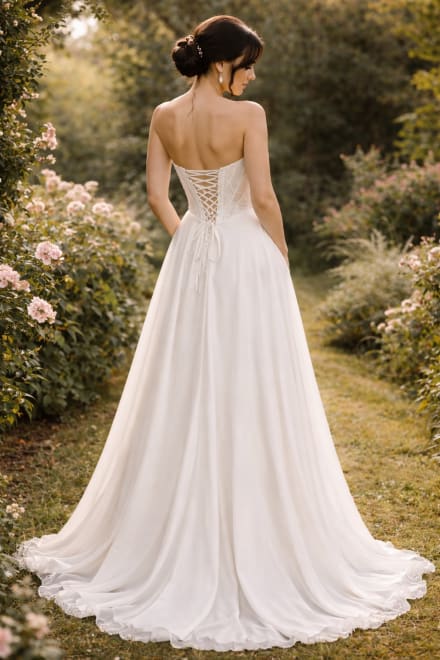
Look at the main families: bohemian (lace, sleeves, movement), ball gown (full skirt), mermaid (fitted silhouette), minimalist (clean lines). Behind those names are technical choices: skirt volume, bodice support, fabric weight, crepe softness or lace relief. Bring 5 to 10 reference photos to your fitting, not a list of 50 contradictory looks.
Plan your budget
The dress is only part of the outfit budget: allow for veil or cape, shoes, jewellery, a possible second dress, and alterations. In store we explain clearly what is included in the listed price.
Set an overall budget before your fitting and share it with your advisor — that avoids falling for a dress out of reach. We can suggest alternatives in the same style family at different price points.
Allow enough time
Ideally, start 8 to 12 months before the wedding. Some dresses are available immediately; others need a supplier order (12 to 16 weeks). Workshop alterations also require several visits.
During busy periods on the French Riviera (spring–summer), fitting slots fill quickly: book early even if not every detail of your décor is fixed yet.
Prepare for your fitting
Wear nude underwear, heels close to your wedding height and minimal makeup on necklines. Come with 1 or 2 trusted guests — too many opinions can cloud your own feeling.
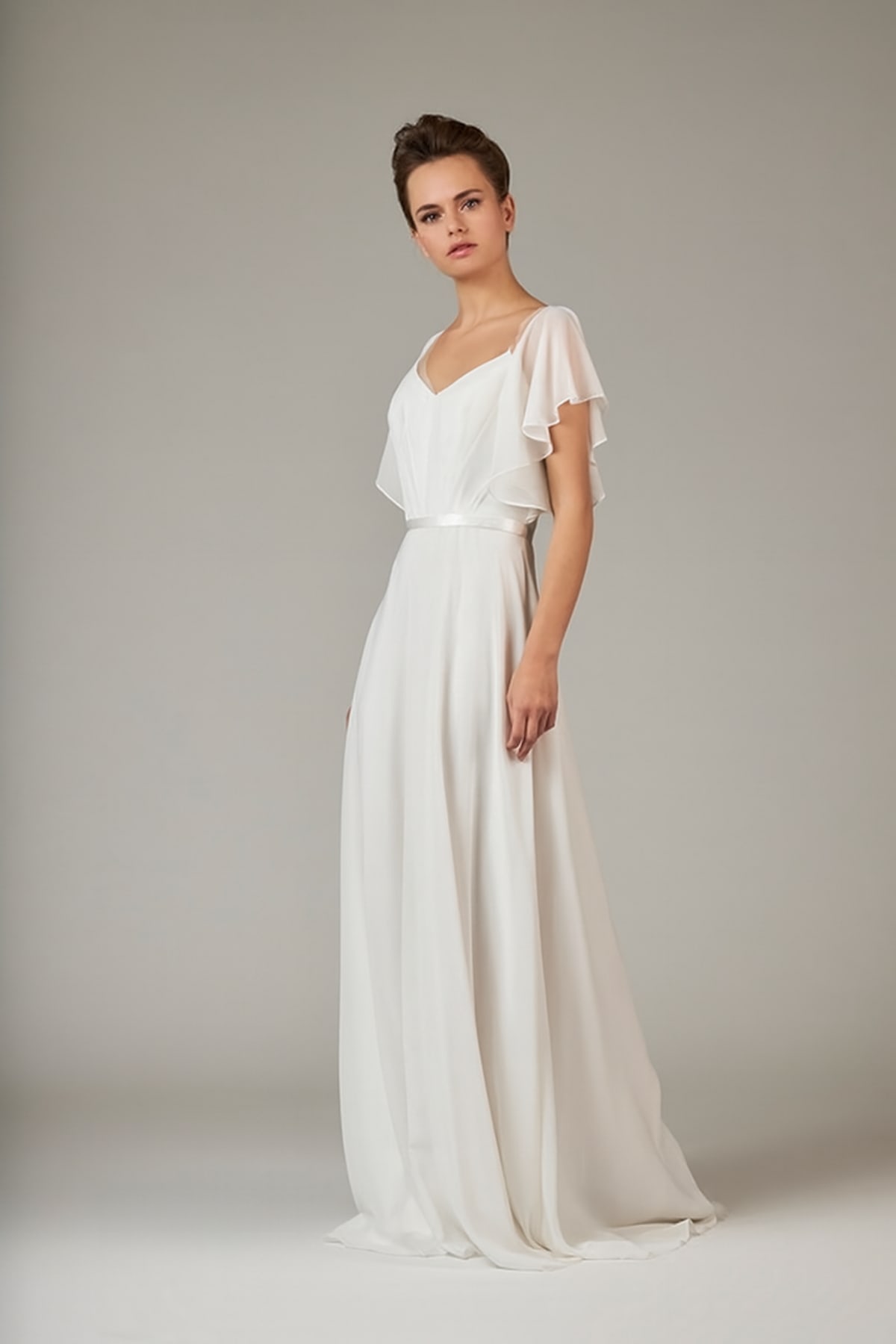
In the fitting room, go step by step: silhouette first, fabric second, details last. A dress should be judged standing, seated and in motion: a fabric may fall beautifully in front of a mirror but pull at the bodice, weigh on the shoulders or restrict walking. See our fitting in Cannes page for more.
Body shape and cut
Body-shape guides (mermaid, ball gown, sheath) are useful pointers, but only a fitting decides: the same cut can surprise you positively. See our dress and body shape guide.
Our team looks at posture, torso length and proportions to suggest dresses that flatter you — without boxing you into a single category.
Common mistakes to avoid
Buying too early before your wedding style is clear, or waiting until the last minute. Copying an influencer's dress without considering your shape. Bringing too large a committee that imposes its taste.
Forgetting comfort: you will wear the dress for hours and may dance. Leaving accessories until the last moment when they change the whole silhouette. Confusing evening rental with wedding dress purchase: our wedding dresses are sold for final alterations.
How tastes have evolved in our shop
Tastes move in cycles. The 1980s left room for marked sleeves and visible volume; the 1990s and 2000s saw cleaner lines return; the 2010s popularised bohemian dresses, detailed backs and highly personal weddings.
These changes show that a wedding dress is never separate from its era. To avoid a costume effect or an overly dated trend, look at what remains readable over time: good proportion, quality fabric, a detail placed in the right spot. That is often what ages best in photographs.
Our selection