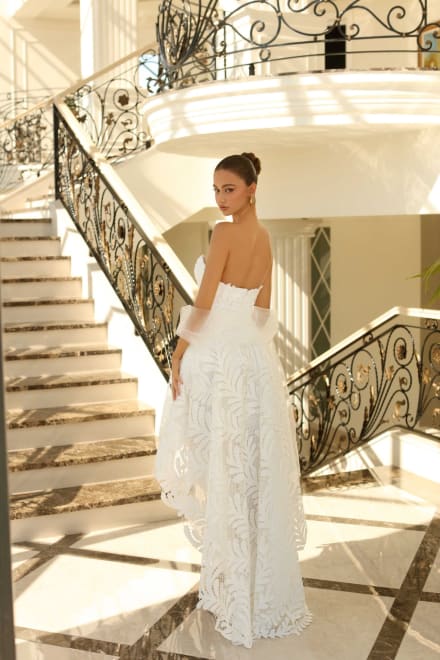
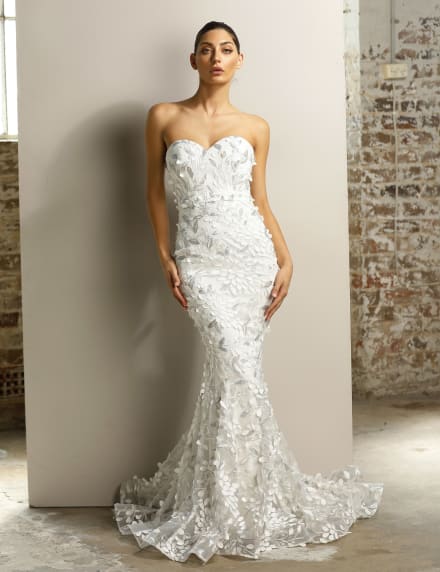
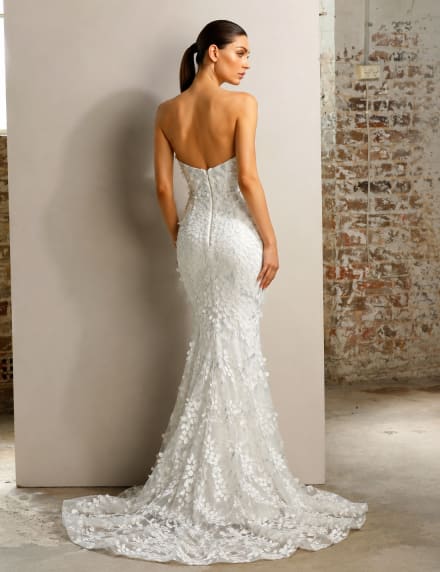
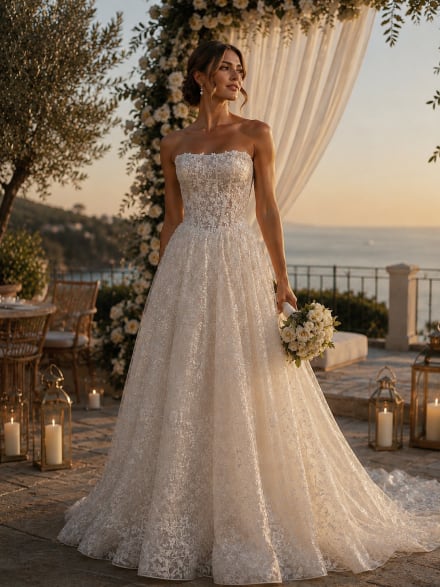
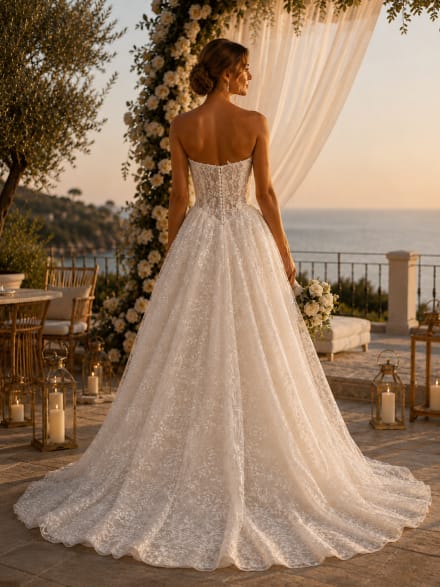
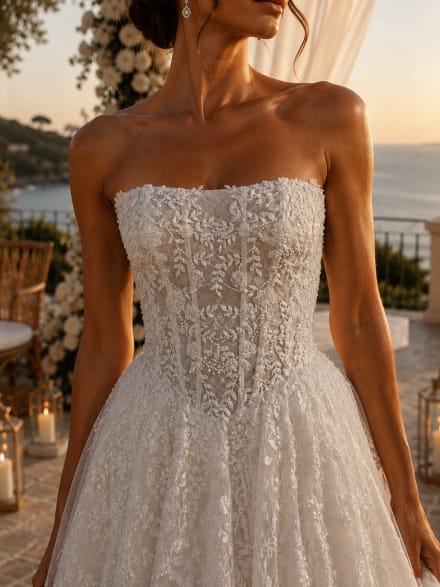
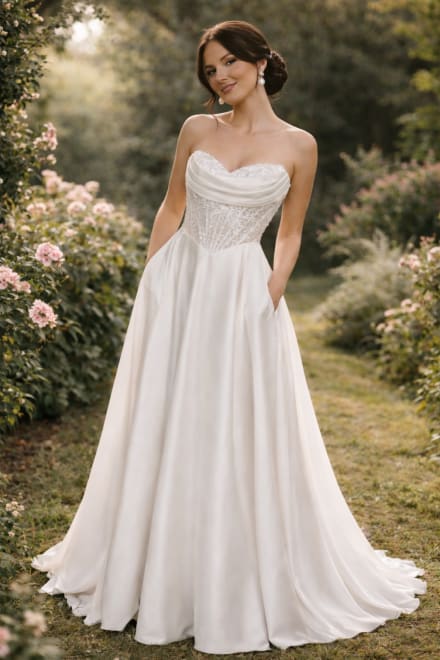
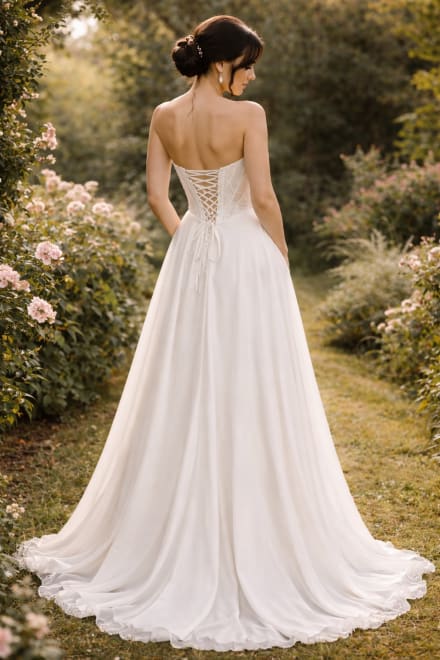
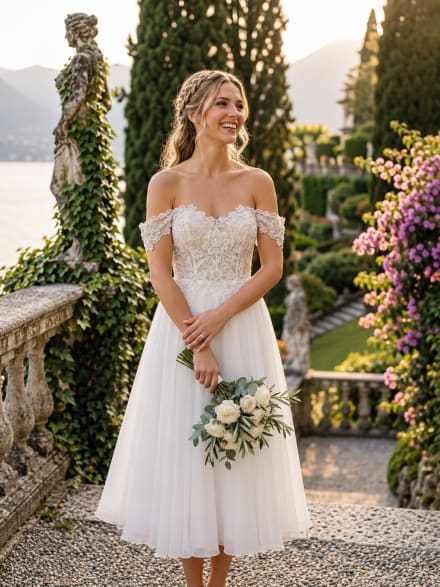
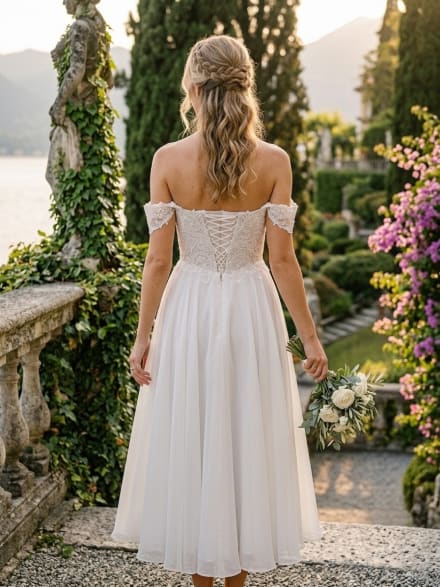
The white dress has not always been the norm. For centuries brides wore their finest dress — often colourful — and white gradually became a symbol of purity and social status.
Understanding this history sheds light on today's choices: why we attach ourselves to certain silhouettes, and how the wedding dress keeps evolving.
Our collections
Origins and symbols
In antiquity and the Middle Ages, the wedding dress often signalled family wealth more than a single style. Brides frequently wore their finest dress, sometimes colourful, with fabrics and ornaments indicating social rank.
In Western usage, white spread gradually in the 19th century, notably after Queen Victoria's wedding in 1840. It later became strongly associated with the bride, although ivory, champagne and other shades remain very present.
Colours and cultures
Red in several Asian traditions, blue associated with fidelity in some older European usages, white in the modern Western imagination: marriage remains a cultural ritual before it is a simple fashion question.
Today ivory, champagne, nude, blush or touches of colour sit alongside pure white. These shades change how the dress reads on skin and in photos: optical white can look very bright, while ivory often softens contrast.
The contemporary bride
Second marriage, civil wedding, short dress, suit: codes are opening up. In Cannes we support this diversity. See how to choose your dress.
Our selection