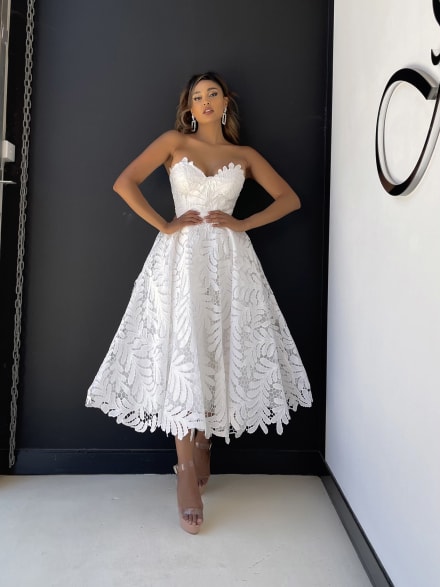
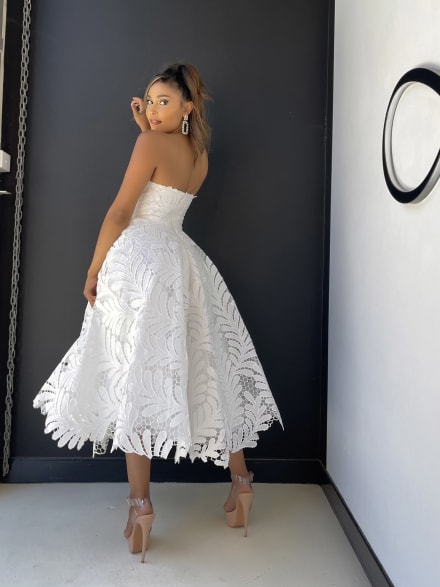
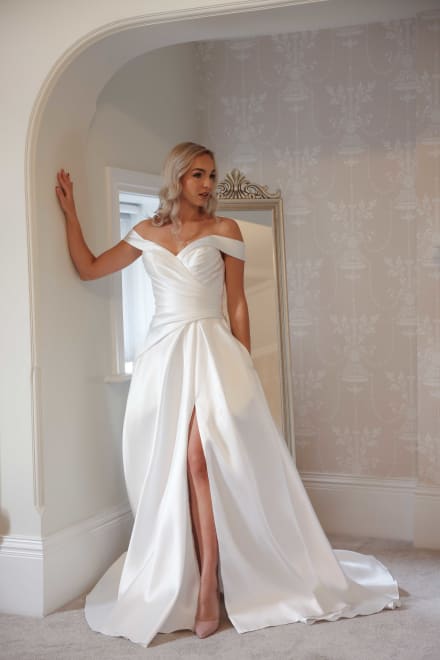
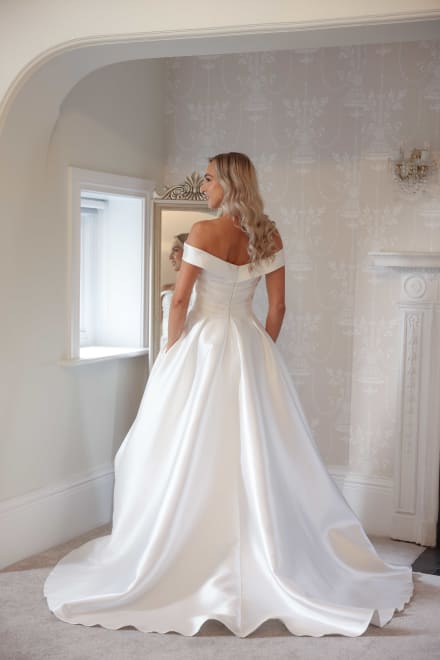
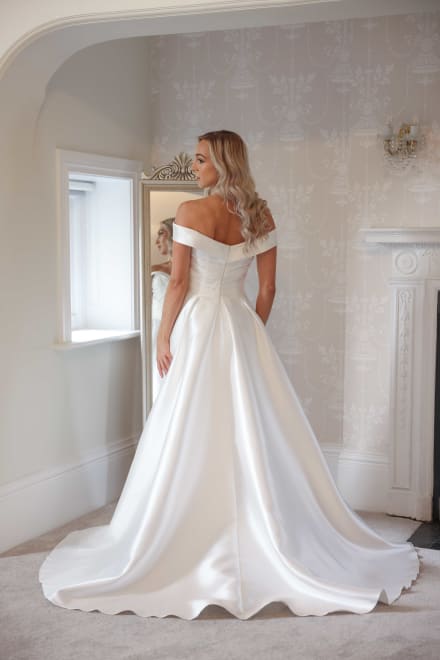
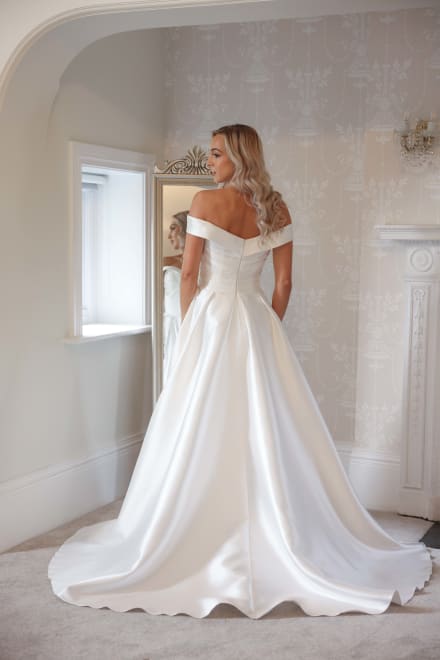
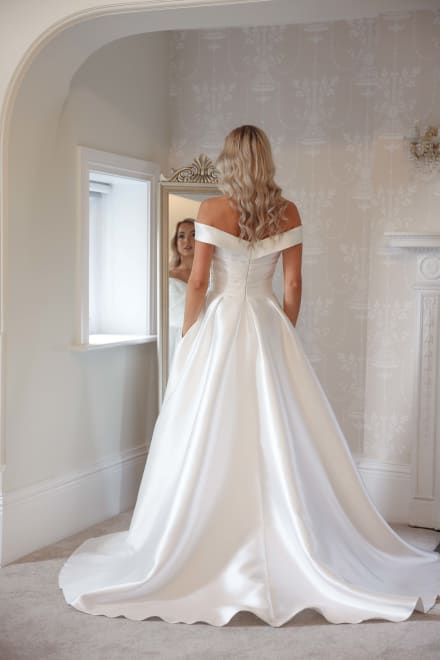
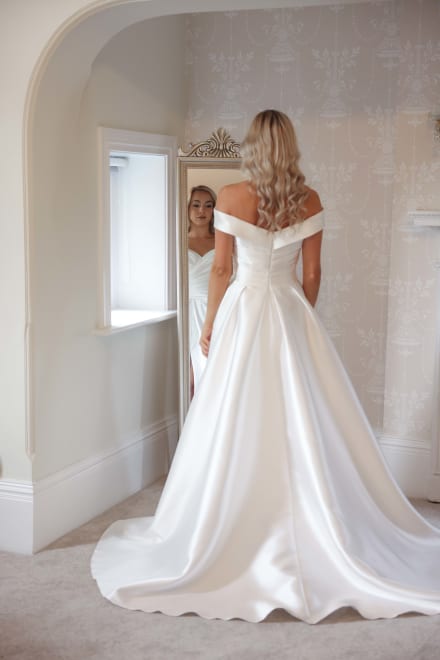
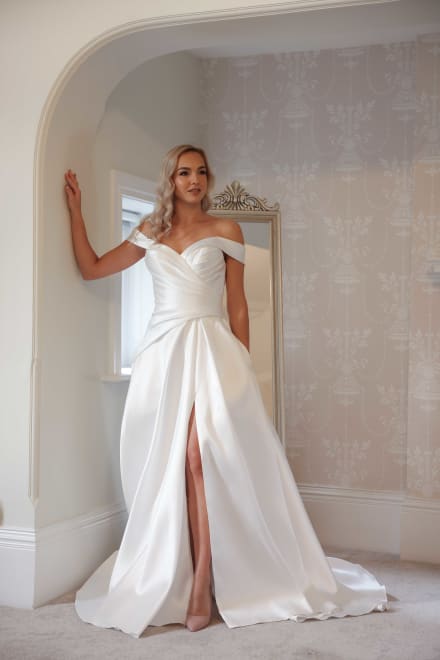
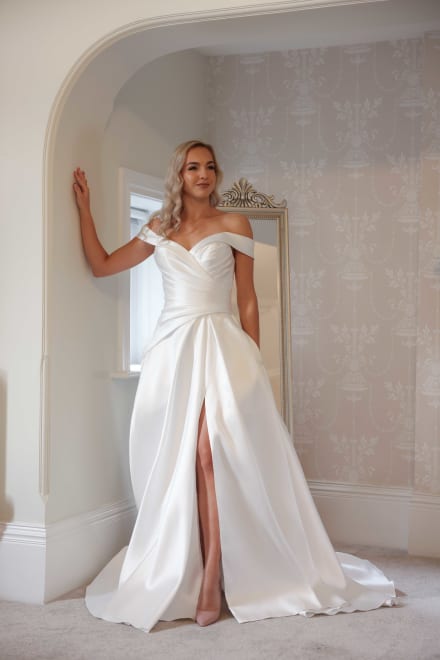
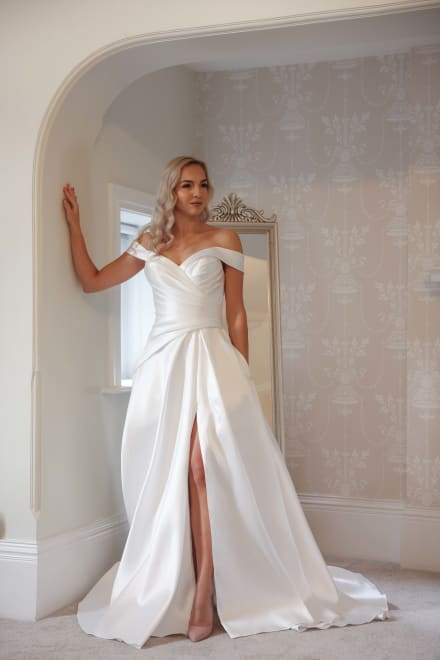
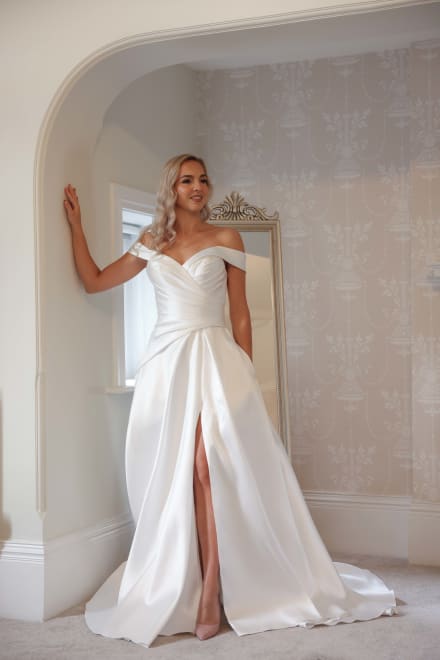
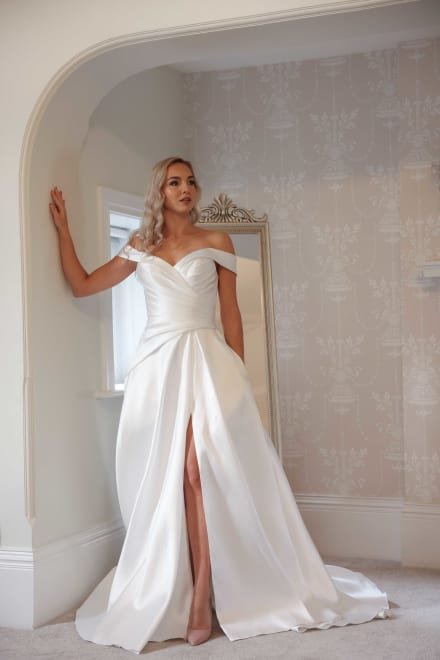
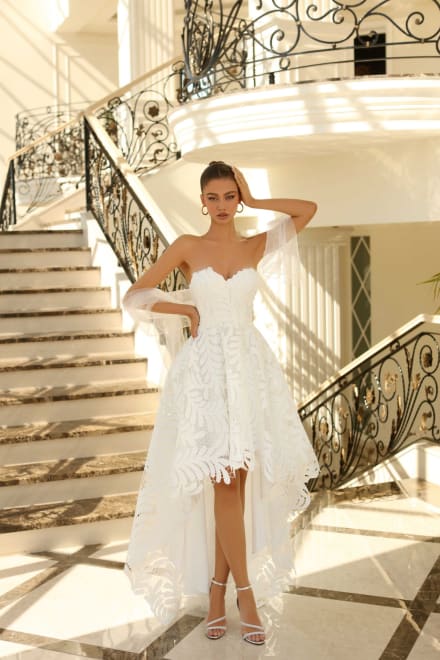
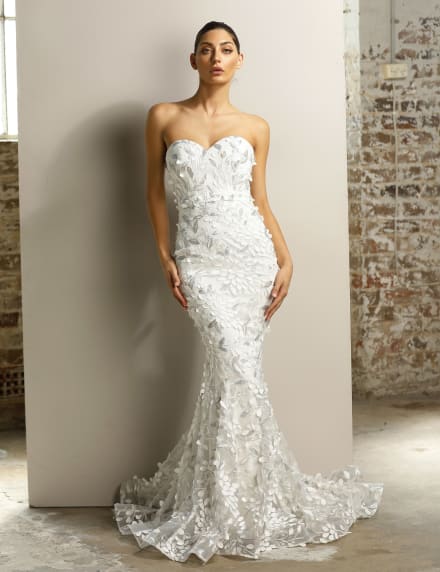
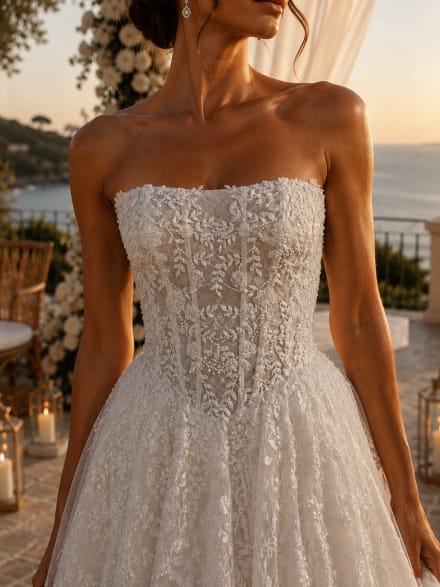
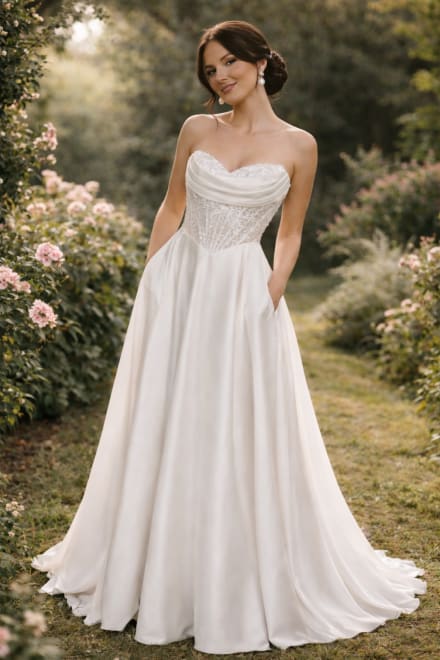
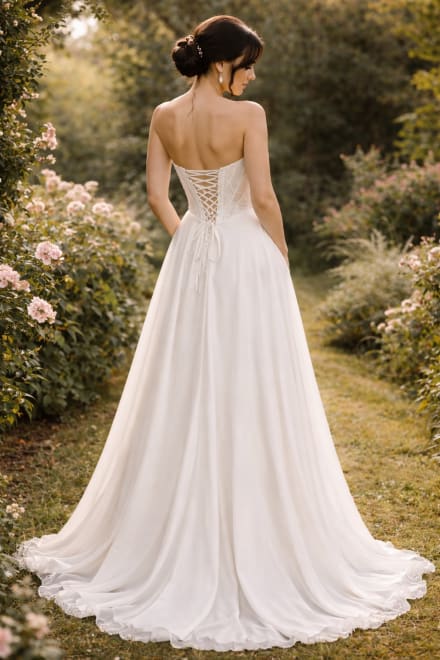
Buying a wedding dress is not only choosing a model: it is an adjustment journey. Bodice, length, straps, train — every detail affects the final look and your comfort for hours.
At Autour D'Un Soir in Cannes we explain this work openly, so you understand why fitting and the workshop are inseparable from a successful dress.
Bodice and support
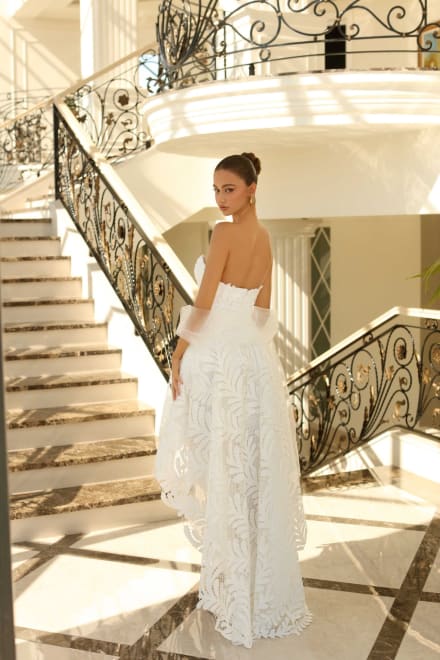
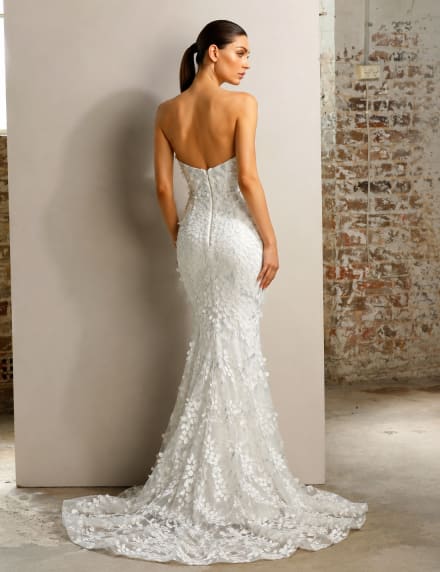
The bodice must support without squeezing. On a strapless or open-back dress, a few millimetres change the drape: too loose and the dress slips; too tight and it marks the skin and restricts breathing.
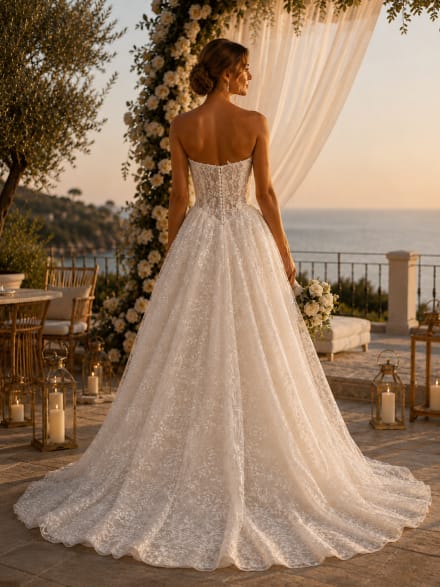
Structured dresses often use seams, boning, linings or internal support. Alterations must preserve that architecture, especially when the back is open or lace leaves less room for correction.
Length and hem
Hem length is decided with your wedding-day shoes, on a floor similar to the ceremony venue. A long dress should skim without making you trip; suit trousers should break correctly over the shoe.
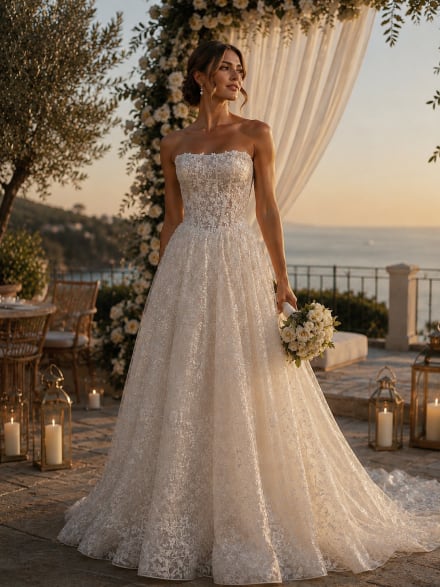
Outdoors on the Riviera we also anticipate terrain: grass, sand, stone or stairs. A spectacular length in store may become less practical if the ceremony is outside or the evening involves a lot of movement.
Train and movement
A dramatic train needs balance between aesthetics and practicality. We can add bustle systems for the evening or shorten slightly for dancing.
Frequently asked questions
Standard sizes rarely match a body 100%. Without alterations, a dress may slip, pull or mark in the wrong places.
After choosing the dress, ideally 2 to 3 months before the wedding to allow workshop appointments.
At Autour D'Un Soir, 29 boulevard Carnot. See wedding dress fitting.
Our selection