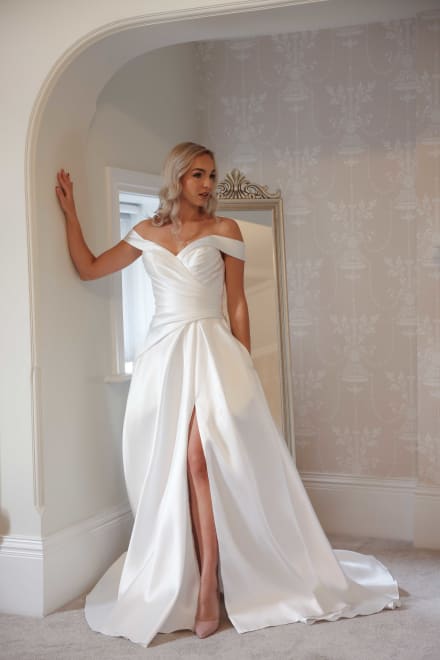
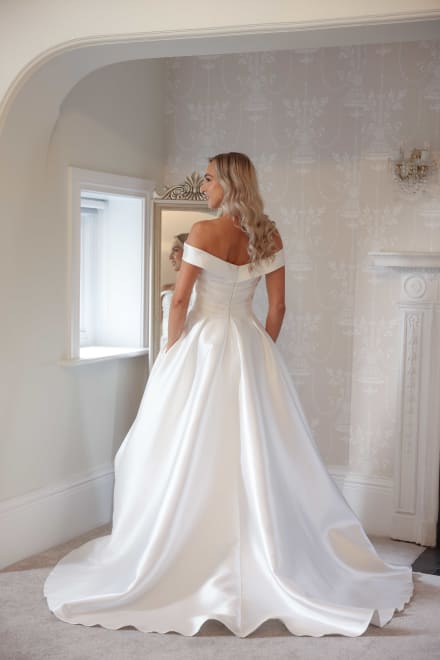
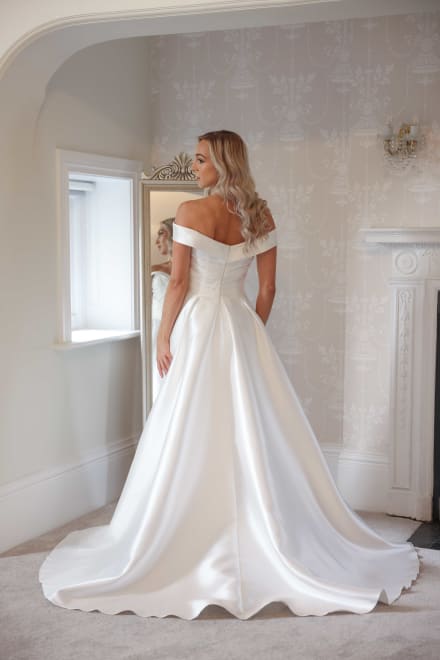
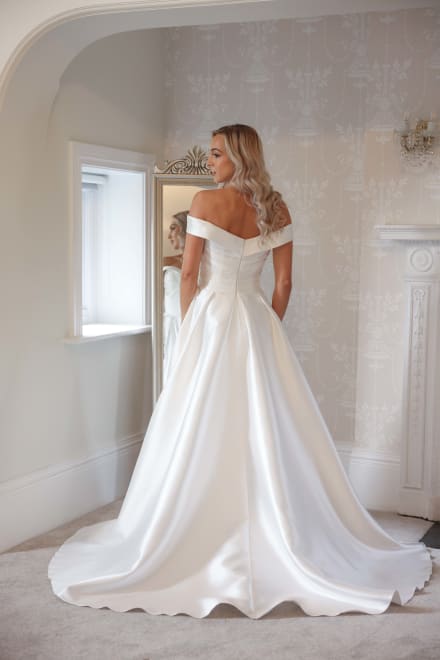
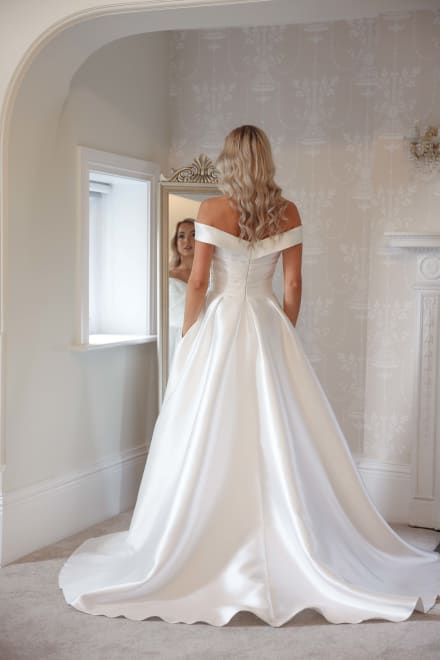
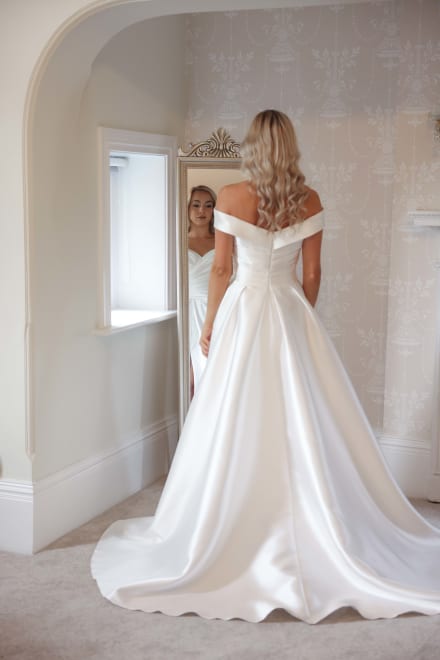
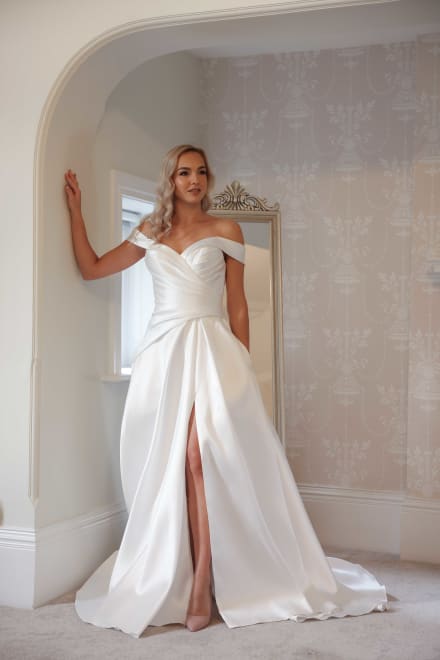
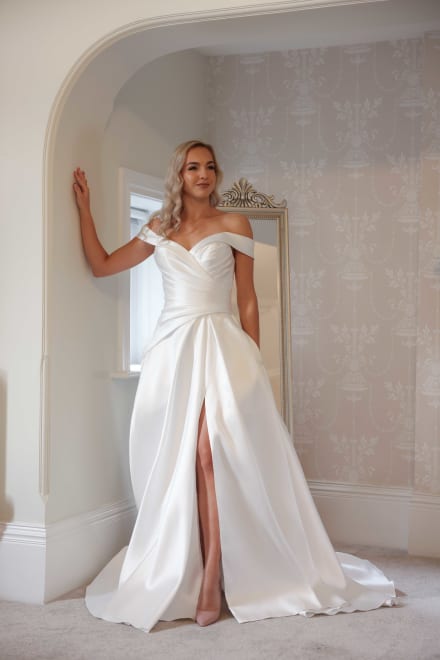
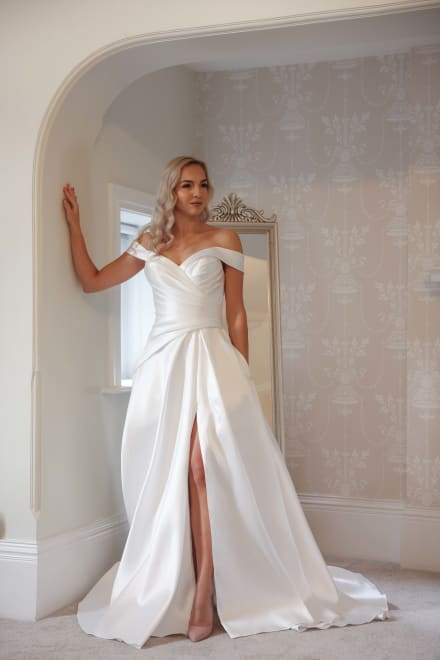
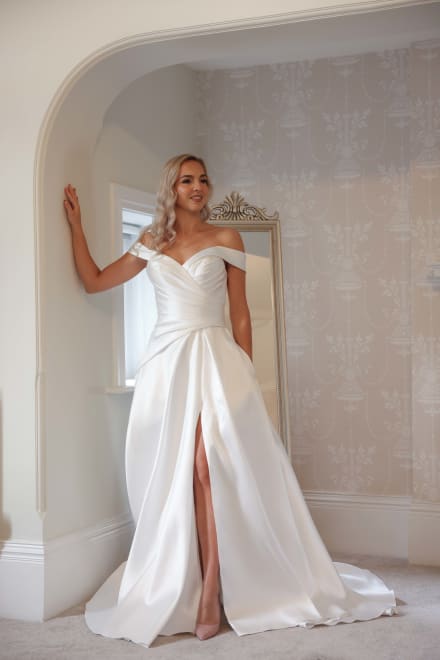
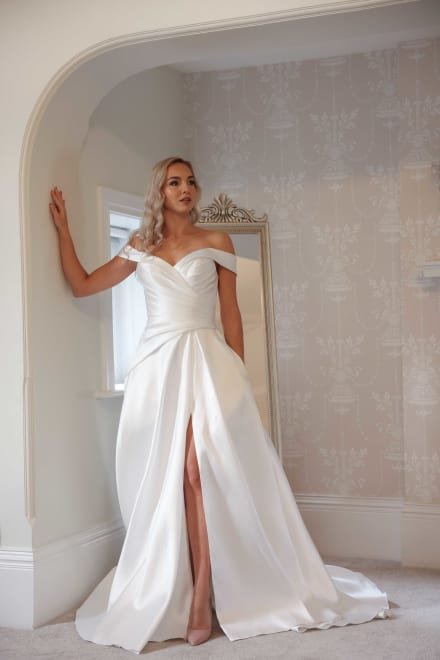
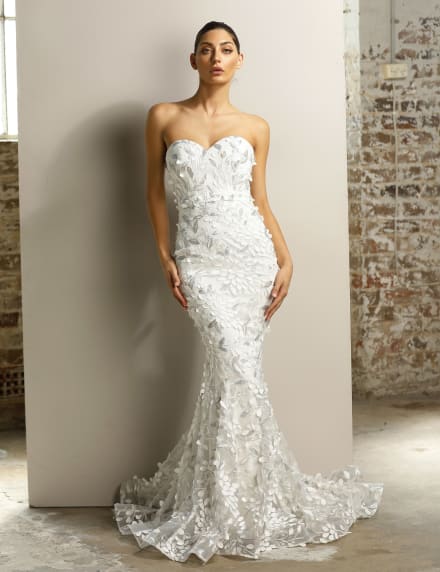
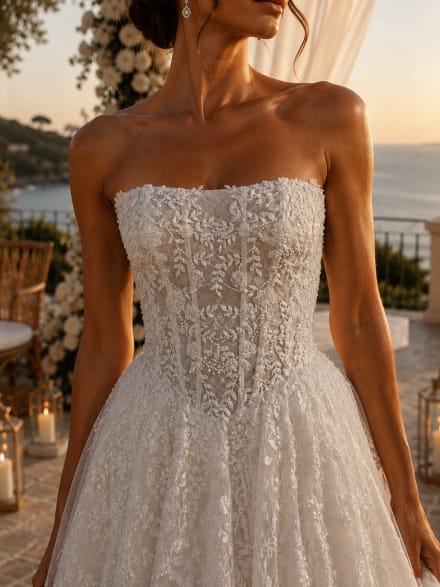
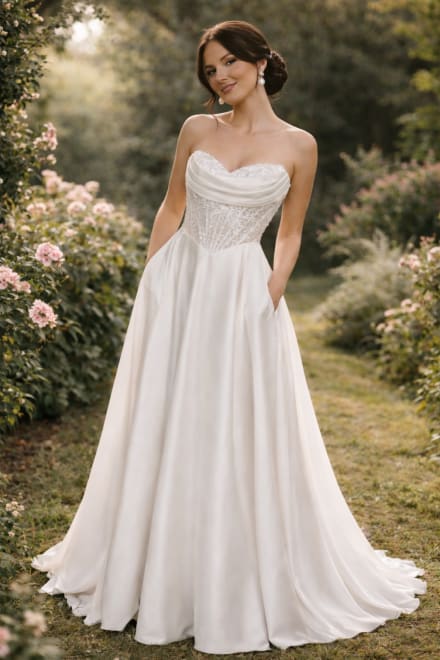
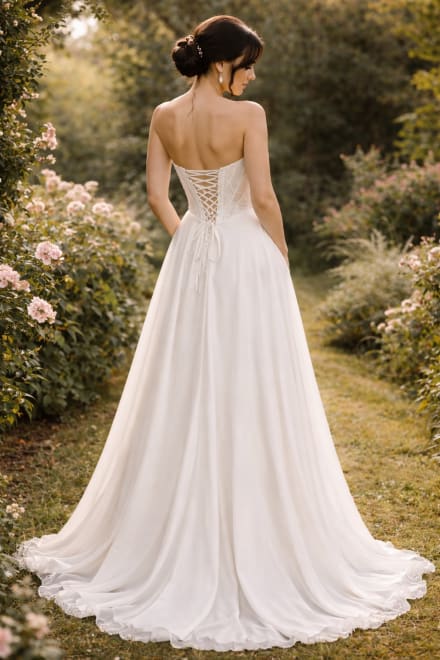
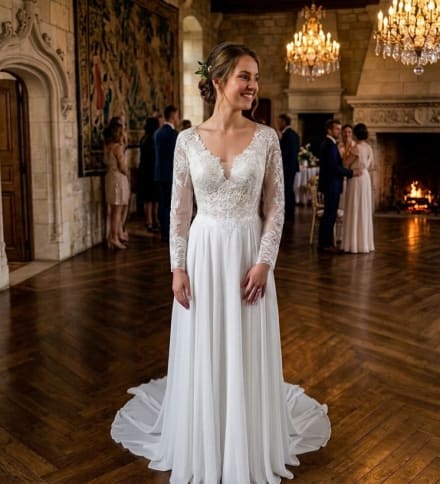
Behind every adjusted dress or altered suit are expert hands. At Autour D'Un Soir, the workshop is not a side service: it is the heart of the craft. Sophie, Sandra and the sewing team turn a standard garment into a piece that truly fits your shape.
This guide takes you behind the scenes: gestures, steps and why sewing makes all the difference, especially for a wedding dress.
Our collections
Daily life in the workshop
Hems, tapers, straps, trains, linings: every alteration starts with careful observation in the fitting room. The seamstress notes tension points, posture and real length in motion — not only in the mirror.
Technically, a successful alteration respects the garment's construction: fabric grain, lining, boning, closure, embroidery or lace motif. This step is discreet for the final client, but it determines comfort and elegance on the day.
Gestures that matter
Tapering a bodice without distorting lace, shortening a train while keeping the drape, adjusting a sleeve for dancing: these are precise skills built over years of practice.
Difficulty varies with the fabric. Satin shows tension easily, tulle requires patience across layers, and lace often means repositioning a motif by hand. This textile knowledge creates a clean result without the alteration being visible.
Why it matters for weddings
A wedding dress bought without alterations is rarely perfect: bodies are unique and ready-to-wear is built for standard sizes. That is why we sell wedding dresses in store with full workshop support. See wedding dress alterations expertise.
Our selection